How to Plan a Concert Tour: From Routing to Settlement
Learn how to plan a concert tour across goals, routing, budgets, venues, crew, production, travel, promotion, show days, and settlement.

tour-flow Team
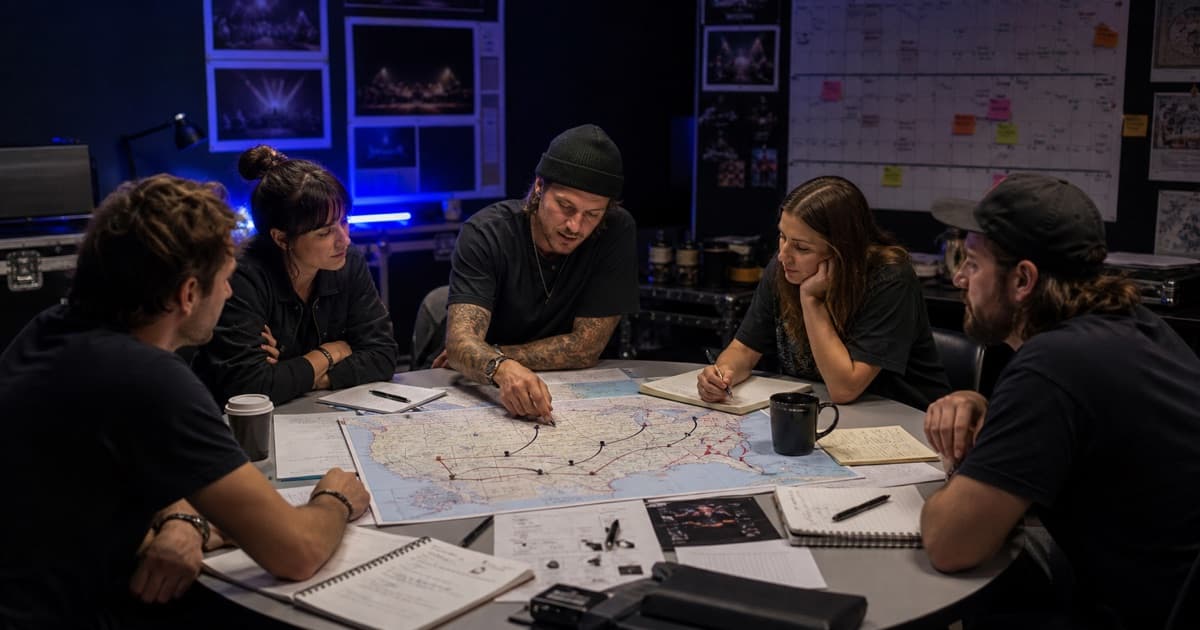
Planning a concert tour means turning artistic, commercial, and operational goals into a sequence of dates the team can actually deliver. The route must work for the audience, the budget, the crew, the equipment, and the time available between venues.
This process moves from broad decisions to detailed execution.
1. Define the Purpose of the Tour
Decide what success means before placing holds. The priority might be ticket profit, audience growth, a release campaign, festival exposure, market testing, or maintaining momentum.
Set measurable constraints:
- Target markets and venue sizes
- Earliest and latest dates
- Maximum run length
- Acceptable travel radius
- Minimum deal or contribution
- Crew and production scale
- Required rest days
These rules make later routing decisions faster.
2. Build a Financial Model
Estimate income conservatively and costs completely. Include artist and crew fees, transport, fuel, flights, hotels, per diems, production rentals, insurance, visas, freight, commissions, tax, marketing, and contingency.
Model the tour at three levels:
- Whole tour: total projected income, expense, and margin.
- Per event: guarantee, variable income, local costs, and contribution.
- Per day: the cost of travel and off days between revenue dates.
A profitable-looking show can still create a bad routing sequence.
3. Draft the Route
Start with anchor dates such as festivals, major markets, media commitments, or venue availability. Connect them with realistic geography rather than a visually neat line.
Check distance, border time, parking access, driver hours, hotel availability, load-out time, and the next day's load-in. Add recovery before the team needs it, not after the route has been announced.
4. Confirm Venues and Deals
Track holds, challenges, confirmations, deal terms, capacities, curfews, production limitations, and settlement requirements. Do not treat a verbal date as operationally confirmed.
Once a show is locked, record the current promoter, venue, production, ticketing, security, and settlement contacts.
5. Design the Touring Operation
Choose the smallest team and production package that can deliver the show consistently. Define roles, reporting lines, decision authority, travel expectations, and handoffs between management, production, audio, lighting, backline, merch, and drivers.
Build reusable crew, schedule, production, and checklist templates before duplicating work across dates.
6. Advance Every Event
The advance converts the deal into a workable show day. Confirm:
- Loading and vehicle access
- Stage, power, audio, lighting, and backline
- Local labor and security
- Dressing rooms, showers, laundry, and catering
- Guest list and accreditation process
- Timings, curfew, and noise restrictions
- Merch terms and settlement procedure
Track unanswered questions visibly. An email sent is not the same as an answer received.
7. Plan Travel and Hotels
Create dedicated travel-day and off-day records rather than hiding movement in show notes. Verify passenger names, rooming lists, late arrivals, parking, breakfast, checkout, and lobby calls.
Keep personal travel data restricted while making the operational timing easy for the crew to access.
8. Publish the Crew-Facing Plan
Turn the master operation into a clear digital itinerary or tour book. Share the current schedule, addresses, contacts, travel, hotels, and relevant documents. Test it on the devices the crew will use.
Use messages to announce changes, but keep the current plan in one authoritative place.
9. Run Each Show and Capture Reality
During the tour, record actual timings, costs, issues, decisions, and venue notes. Update future dates when one show reveals a repeatable problem. A live tour plan should improve as the run progresses.
10. Settle and Debrief
Prepare deal terms, ticket reports, approved expenses, merch figures, tax documents, and payment details before the show ends. Reconcile each event while records are fresh.
After the run, compare forecast with actuals and review routing, production, crew, travel, venues, and tools. Turn the lessons into updated templates for the next tour.
tour-flow connects the timeline, events, crew, advances, schedules, documents, booklets, travel, and financial context behind this process. Plan your next concert tour in tour-flow
More Articles
Concert Tour Itinerary Template: Build a Road-Ready Plan
Use this concert tour itinerary template to organize show days, travel, hotels, contacts, call times, and the details your crew needs on the road.
July 21, 2026
Tour Budget Tracking: How to Keep Costs Visible Before Settlement
Learn how to track tour budgets by event, compare planned and actual costs, and spot overruns before settlement day.
June 11, 2026